MOTHER LODE TRAILS
  • Home
  • About
  • Contact
  • Volunteer
  • Links
    • Law Enforcement Emergency
    • Federal, State, County Districts Parks & Trails
    • Running Clubs
    • Equestrian Clubs
    • Mt. Bike Clubs
    • Hiking Clubs
    • Trail Advocacy Organizations
    • Phone Numbers State & Federal Parks, Trails & Lands
    • Where to Eat on the Trails
  • News
  • Alerts

Webber Lake Campground reservations opening May 12

5/9/2022

 
Picture
Truckee Donner Land Trust is thrilled to announce that Thursday, (May 12) at 8 a.m. we are opening Webber Lake Campground reservations for June 17 through June 30.
Reservations are available for individual campsites online or by calling (530)587-2267.

HISTORY
In October 2012, the Truckee Donner Land Trust acquired the 3,000 acre property from its longtime owners, Clif and Barbara Johnson. Webber Lake had been in the Johnson Family since the 1870s. Until the Land Trust's acquisition, the property had been closed to the public for decades. The property consists of Webber Lake and two large meadows, Lower Lacey Meadow and Upper Lacey Meadow. Lacey Creek meanders through both meadows and feeds Webber Lake. Dr. David Webber’s hotel, built in 1860, is the last standing stagecoach hotel (out of about 30) on the historic Henness Pass Road.

WHAT TO DO
Camping, fishing, hiking, kayaking and boating, paddle boarding, running, mountain biking, swimming and doing nothing all make it very easy to spend a week at Webber Lake.

Camping: Webber Lake offers a great camping experience between Truckee and Sierraville. Webber Lake Campground's 46  sites are open when conditions permit in the spring until October 15, or when winter weather shuts us down. All sites are spacious, well shaded and come with a table, fire pit and bear box.  Sorry, hook-ups and a dump station are not available. We love dogs but they must be leashed in the campground. Reservations are strongly suggested, walk-ins are not guaranteed.

Boating: Watercraft of all kind are welcome, but there is a 5-mph speed limit. Due to concern about aquatic invasive species (AIS) your craft is likely to be inspected.  A boat ramp and trailer parking are available. Sierra Country requires an AIS form be completed before launching that you download here.

Fishing: Webber Lake is legendary for anglers and arguably the birthplace of sport fishing in the Sierra when Dr. Webber first stocked the lake in 1860. Conventional gear fishing and fly fishing are permitted. Fishing is regulated by the California Department of Fish and Wildlife’s Sierra District General regulations. 

Hiking: The Lacey Valley Trail, about six miles roundtrip, offers an easy and memorable hike. The meadows offer spectacular wildflowers in spring and summer and are host to over one hundred species of birds, including rare and endangered species. Download a wildflower field guide provided by Ann Penfield. The trail begins at trailhead at the west end of the lake. (Signs will direct you.) There is not a bridge across Lacey Creek and for most of the summer your feet will get wet. The trail is wide and mostly flat with an uphill section between Lower and Lacey Meadows. The hike ends where the trail meets the Meadow Lake Road. Return the same way you came.

Day Use: Parking and picnic tables are available at no charge.

https://www.truckeedonnerlandtrust.org/webber-lake-lacey-meadows


CALIFORNIA AIR RESOURCES BOARD LAUNCHES SMOKE SPOTTER APP

5/6/2022

 
Picture
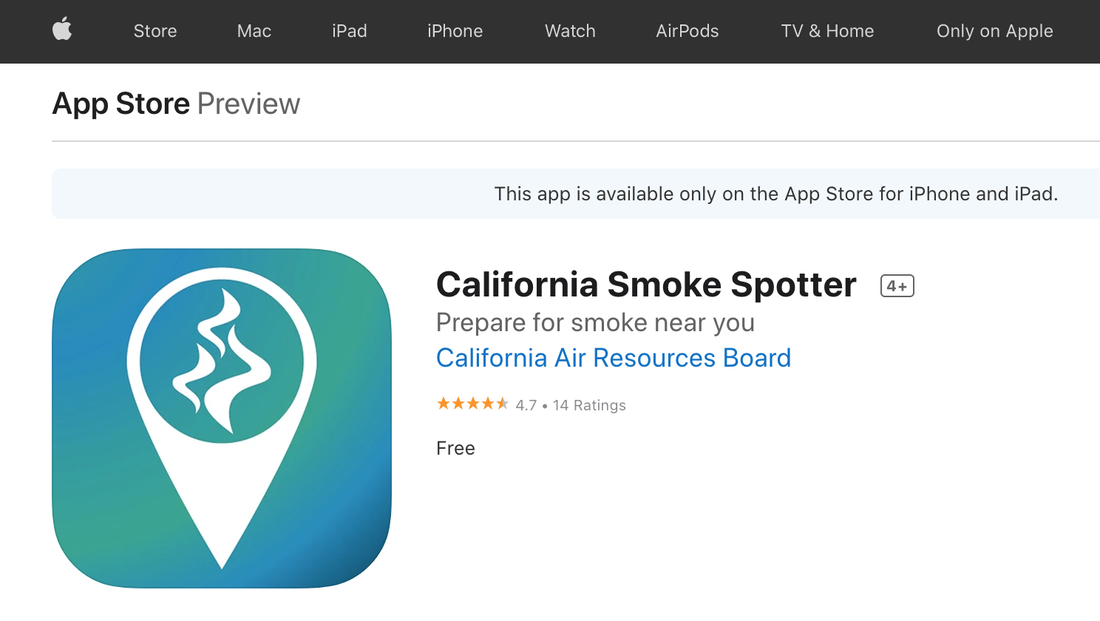
CALIFORNIA AIR RESOURCES BOARD LAUNCHES SMOKE SPOTTER APP
New mobile app helps Californians track smoke from prescribed fires

SACRAMENTO – A new, first of its kind app launched today by the California Air Resources Board (CARB) shows Californians when and where prescribed fires are being planned so they can prepare for potential smoke impacts.

The California Smoke Spotter app provides a comprehensive overview of the latest information on prescribed fires, projected smoke impacts, current air quality and educational material. This will help them plan their day’s activities, and also determine if smoke is from a local prescribed fire. Key features of the app include:

Location, size, and burn status
24-hour statewide smoke forecasts
Personalized alerts that notify users when a prescribed fire will be burning nearby (notifications can be set for multiple locations)
Current Air Quality Index (AQI) data to help users make health-based decisions
Additional information on prescribed fire, its benefits, and how users can protect themselves from smoke
California Smoke Spotter: Helping Californians prepare for prescribed fire and smoke (Three screenshot images showing features of mobile app, and logos for Google Play and the Apple App Store)
CARB will update the California Smoke Spotter app as new data and technology become available. Staff is already working on an update to add information and smoke forecasts for wildfires to the app later this year.

In 2020, California experienced its worst wildfire season in modern history, and air pollution from smoke reached unprecedented levels. Prescribed fire is an important tool in California’s efforts to prevent and mitigate the impacts of wildfires, including smoke.

Wildfires are unplanned, often burn out of control and their smoke impacts can be widespread and unpredictable. By contrast, prescribed fires are highly managed, less intense, smaller and slower-moving than wildfires. For these reasons, they produce less smoke, but can sometimes impact nearby communities. Because of the careful planning in designing each prescribed burn, the app can help ensure that nearby communities have an opportunity to prepare for possible smoke impacts.

“That’s where California Smoke Spotter comes in,” said CARB Executive Officer Richard W. Corey. “Until now, Californians have had to bounce between multiple sources to get the information they need to protect themselves from smoke. By providing a one-stop-shop for prescribed fire, smoke and health information, this app will make that process easier and more accessible to everyone.”

CARB announced the launch of California Smoke Spotter at the first meeting of Governor Newsom’s newly expanded Wildfire and Forest Resilience Task Force. The announcement came less than a week after the Governor unveiled his revised budget plan for the state. The California Comeback Plan will include $2 billion in emergency preparedness investments, including land and forest management projects like prescribed fire.

State forestry policy calls for an increase in fuels reduction efforts including the use of prescribed fire. CARB supports that policy and is releasing California Smoke Spotter during the spring burning season as part of its efforts to help the state balance air quality protection with fire protection and land management goals.

“CARB has been an important partner in the state’s efforts to increase the use of prescribed fire to protect local communities,” said Chief Thom Porter, State Forester and Director of California Department of Forestry and Fire Protection. “As CAL FIRE continues to increase the use of prescribed fire, having a tool for citizens to monitor potential smoke impacts will be imperative in helping Californians protect themselves from localized prescribed fire smoke.”

Download the app on the Apple Store
<https://apps.apple.com/app/id1531391671>
​

Download the app on Google Play
<https://play.google.com/store/apps/details?id=com.prescribedfiresapp>

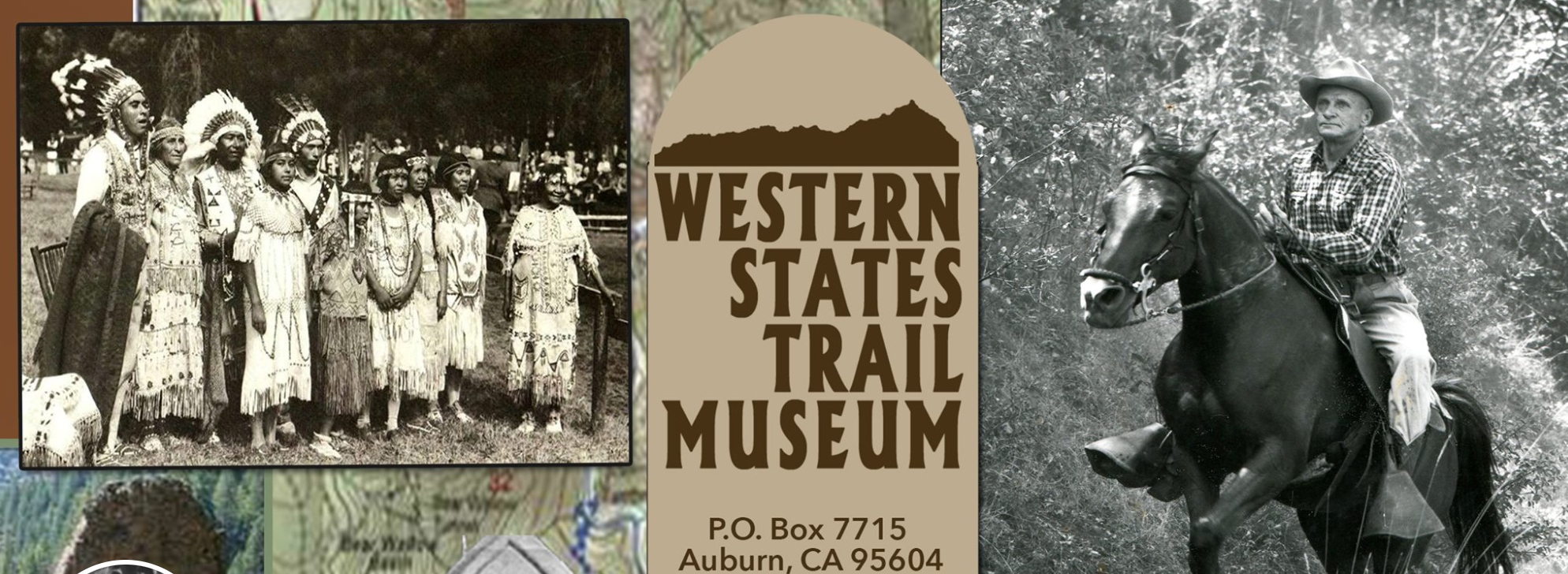
Western States Trail Museum to be established in Auburn

5/3/2022

 
Picture
Western States Trail Museum Update – An Idea Coming to Fruition
News Release 

The storied history of the Western States Trail begins as far back as the pre-historical era with fleet-footed Native Americans traveling back and forth over the Sierra Nevada gathering and hunting for food, along with various tribes bartering trade on the western slope with those on the eastern side.  During the early to mid-1800s American explorers, settlers, and gold seekers from the eastern United States made their way across the Great Plains and the Great Basin Desert with some who sailed around Cape Horn to what would later be called California.  Following the discovery of gold near Coloma, California, in 1848, the rush of hundreds of thousands of would-be miners and entrepreneurs in 1849 had made the difficult journey overland by foot, horseback, mule, oxen-pulled wagons, or horse-drawn stage coaches to the foothills of the Sierra Nevada.  Express Riders of Wells Fargo and Adams Express Companies traveled by horseback in the foothills along the American River, providing much need communication and supplies to the mining camps and towns that had sprung up during the Gold Rush. 
 
The Western States Trail, the historic route as it is recognized today, became known for being the shortest route over the Sierra Nevada used by miners from the northern gold mines of California’s Mother Lode to and from the Comstock Lode of silver mines in northern Nevada.  Today, the Western States Trail is one of only a few remaining trans-Sierra trail routes that is largely untouched by development and, for the most part, remains much like what the early-day users would have known.  Currently this trail is home to the annual, world-renowned endurance equestrian event begun in 1955, the Western States 100 Mile One Day Ride (the Tevis Cup) and the internationally celebrated ultra-marathon Western States Endurance 100 Mile Run established in 1974.
 
The documented history of this trail between Carson City, Nevada, and Sacramento, California, along with relevant artifacts stands ready for display and interpretation in the proposed Western States Trail Museum.  It is the intention of the Western States Trail Museum, a California Non-profit Public Benefit Corporation 501(c)(3) organization, to create a financially stable, evocative, well-staffed museum that is overseen by a responsible, functioning board of directors and will remain a legacy for generations to come. 
 
The proposed public/private partnership arrangement with the City of Auburn for the prospective museum site in the historic Central Square at 1103 High Street in Auburn, California, required the development of a Business and Operational Plan, which includes the cost of tenant improvements necessary to meet the expectations from the City of Auburn (owner of the building) and the needs of the Auburn Chamber of Commerce, an existing tenant.  In addition, the Business and Operational Plan guides the board and various committees as it relates to the operation of the museum and its organization, including financial resources, human resources, board of directors’ development and governance, fundraising, marketing, and museum mission, vision and values.  Milestones have been established with reasonable target dates for improvement completions.  Estimates will be obtained for needed tenant improvements including remodeling an area for museum displays, multi-media audio/visual theater room, gift shop, etc.  Estimated costs are being determined for fully funding such improvements as well as operational costs via potential revenue streams and by fundraising efforts including, but not limited to, memberships, corporate sponsorships, private and public grants, monetary and in-kind donations from individuals as well as corporate and non-profit organizations, etc.  The museum organization is working on establishing a hosted website at www.wstrailmuseum.org where the public can view museum plans, updates and pertinent information including community events, monetary donations, in-kind contributions, volunteering, etc.
 
With the valuable input and support from City of Auburn’s Mayor Pro Tem, Ms. Alice Dowdin Calvillo, who currently serves as the Auburn City Council’s appointed liaison to the museum’s board of directors we have accomplished the following:
 
  • On July 26, 2021, the Auburn City Council approved an effort to pursue an exclusive negotiation agreement (ENA) with the museum organization. 
  • On Monday, September 27, 2021, the Auburn City Manager updated the City Council with the progress made in establishing the museum including the proposed exclusive negotiation agreement for their review and approval.  The Auburn City Council voted upon and approved the ENA that serves as the first big step in establishing the museum. 
 
As a result, we are currently negotiating the lease agreement with the City of Auburn.  As part of this process, we are conducting an independent site assessment to identify needed improvements.  In addition, architectural design concept plans are expected to be completed by the end of June 2022.  Now that we have a target to shoot for, our Business and Operational Plan, which includes financing and funding plans, will be submitted to the Auburn City Council along with the results from the property condition assessment and proposed lease agreement for their consideration.
 
The museum board of directors have been meeting on a regular monthly basis and are busy developing plans and policies that will help to facilitate the establishment of the museum.  Their vision is to educating the public about the trail’s heritage through exhibitions, in-person educators, hands-on experiential displays and trips, artwork and music that pertain to the trail, guest speaker series, donated artifacts, etc.  A digital presence will hopefully be on display on our future website address at www.wstrailmuseum.org.  As a result, there is much more to come.
 
If you are interested in knowing more about the museum and how you might help, we would like to hear from you.  Please do not hesitate to contact us via Facebook, by email at [email protected], or write to us at: 
 
Western States Trail Museum
Post Office Box 7715
Auburn, California 95604


CVP prevails in Court of Appeal: County violated its Roads and Trails Management Plan in allowing bikes on Bob Middagh Trail

5/1/2022

 
Picture
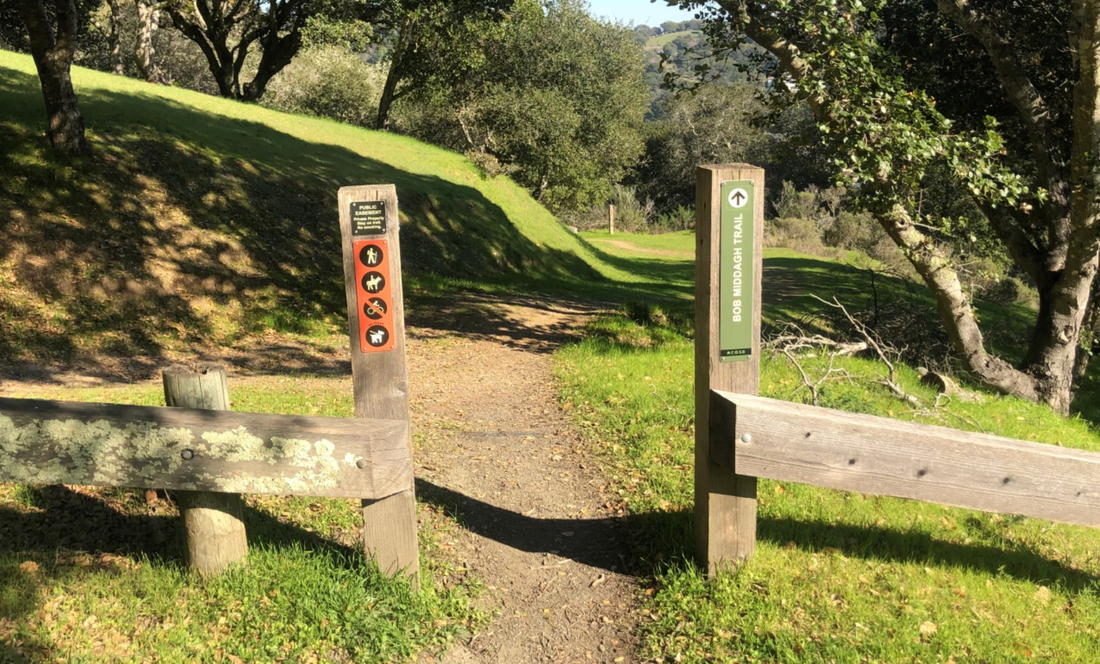
The Bob Middagh Trail is still ONLY for hiking and equestrian use.
​
A  summary of Judge Haakenson’s comments is as follows:
  • “The decision of the District approving the Middagh Trail Improvement Project (allowing biking) must be set aside; 
  • “The court agrees with Petitioner that the District violated CEQA by not conducting the required Initial Study before approving the project. (MPA p. 12) Where a project is subject to CEQA (e.g., not exempt), the lead agency cannot commit to carrying it out or approving the project before determining whether the project may have significant environmental effects; 
  • “The court finds the District's failure to score these proposals did not conform to its own mandatory evaluation methodology and constitutes an abuse of discretion.” 
(PHOTO CREDIT: Sherry LaVars/Marin Independent Journal)
​

History:

On June 7, 2021, Jon Campo, Natural Resource Planner for the Marin County Open Space District (MCOSD), blasted out email notices to announce that MCOSD and The Marin County Bicycle Coalition (MCBC) were holding an event on Friday, June 11th to officially open the Bob Middagh Trail in the Alto Bowl Preserve to mountain biking. The event was also publicized on the County Open Space District and MCBC websites.

The event itself went off with great fanfare and MCBC crowed about “their” legal victory (they filed an Amicus Brief to no effect) over opposition to biking on single-track hiking trails. On social media and their website, they wrote,
“Bob Middagh Trail in Mill Valley recently overcame a series of major legal obstacles, clearing the way for its adoption as a bike-legal trail and setting key legal precedent for more change-in-use projects in Marin and beyond.”
MCBC further claimed that the opposition to opening the Middagh Trail to biking failed because of the
"exhaustion of all legal options to oppose the addition of bicycles."
These comments were repeated by the County and several County Supervisors, including Damon Connelly and Stephanie Moulton-Peters, the supervisor for the 3rd District in Marin. However, there was one problem with these claims and self-congratulation.

None of it was true.

As the County knew very well, the Appeal Court ruling MCBC was commenting on was unpublished and therefore not in any way “precedent-setting.” More significantly, the subsequent Marin Superior Court dismissal of the case of Community Venture Partners, Inc., v. The Marin County Open Space District (CVP v MCSOD) was being contested before the First District Court of Appeal. The ultimate outcome of the case, which would determine if the County had the legal right to open the Middagh Trail to biking, had yet to be determined.

(CVP filed a Notice to Appeal the decisions of Marin Superior Court on March 22, 2021 – 3 months before MCOSD and MCBC announced their Middagh Trail “Opening” event.)

On May 26, 2017, following almost two years of investigations into the Marin County Open Space District’s decision to open the Bob Middagh Trail to mountain biking, Community Venture Partners filed a Petition for Writ of Mandate contesting the legitimacy of that decision.
Among the causes of action were,
  • The existence of the 2014 Road and Trails Management Plan’s (“RTMP”) “Program” Environmental Impact Report did not absolve MCOSD from doing a “Project” EIR for the work considered; and
  • The County’s decision, regarding biking on the Bob Middagh, violated the Guidelines and requirements of the County’s 2014 Road and Trails Management Plan (“RTMP”).
The case of CVP v MCOSD went before Judge Haakenson of the Marin County Superior Court in 2017. More than a year later, on Friday, April 6, 2018, Judge Haakenson ruled in favor of CVP on all its major arguments. In particular, his ruling prohibited the County from opening the Bob Middagh Trail to any form of biking.
A quick summary of Judge Haakenson’s comments is as follows:
  • “The decision of the District approving the Middagh Trail Improvement Project (allowing biking) must be set aside; [Emphasis Added]
  • “The court agrees with Petitioner that the District violated CEQA by not conducting the required Initial Study before approving the project. (MPA p. 12) Where a project is subject to CEQA (e.g., not exempt), the lead agency cannot commit to carrying it out or approving the project before determining whether the project may have significant environmental effects; [Emphasis Added]
  • “The court finds the District's failure to score these proposals did not conform to its own mandatory evaluation methodology and constitutes an abuse of discretion.” [Emphasis And Italics Added]
Noteably, Haakenson's ruling “set aside” the County’s decision to allow mountain biking. Unsurprisingly, on July 17, 2018, Marin County appealed Haakenson’s ruling.
That trial took approximately 18 months. The First Appellate District Court's ruling on the County’s appeal came on February 17, 2020.
Briefly, the Appeal Court’s disposition of the case,
(1) ruled against CVP on the questions regarding our CEQA claim, thus reversing Judge Haakenson’s ruling, and
(2) ruled in favor of CVP, thus affirming Judge Haakenson’s ruling regarding the County’s violation of the Roads and Trails Management Plan. (Subsequently, CVP asked the California Supreme Court to weigh in on the CEQA questions raised in our petition, but the higher court declined to hear the case. When that happens, they do so without any explanation as to why.)
Note that the Appeal Court’s ruling on the second question was, legally, equally important and was in no way lessened by the court’s ruling against CVP’s position on the CEQA questions.
In its affirmation, the Appeal Court concurred (with Judge Haakenson) that the County failed to adhere to its own published rules and procedures and failed to consider alternative proposals for the Bob Middagh Trail, including proposals that were submitted by the public for a “no project” option. This affirmation came with the provision that the County “set aside” its decision to allow biking on the Bob Middagh Trail.
The Appeal Court’s opinion and direction to the lower court could not have been clearer. Apparently, this proved difficult for Marin Superior Court to comprehend.

Marin Superior Court ruling in CVP v MCOSD, Part II
In February 2020, the Appeal Court remanded their split decision in the case of CVP v MCOSD back to the Marin Superior Court. Unfortunately, by that time, Judge Haakenson was no longer hearing cases in civil court and had moved to the criminal court. As such, the case was assigned to Judge Andrew E. Sweet.

From the outset, Judge Sweet’s interpretation of the facts and applicable law was somewhat odd. He not only ignored the higher court’s clearly stated disposition on the County's RTMP violation, but he incorrectly conflated law regarding the CEQA and the RTMP issues before the court.
As such, in his ruling of February 19th of 2021, Judge Sweet discharged the CVP writ without the need for any further actions by the County, saying,
“The court finds that the District has satisfied its obligations pursuant to the writ.”
It is this statement upon which Marin County based its decision to hold the Bob Middagh Trail “opening” event, even though they'd been notified that the case was headed for a second appeal. Their disrespect for the legal process and the authority of the higher court was, in my opinion, inexcusable.
Judge Sweet’s logic was equally puzzling. Out of the blue, he declared that CVP’s “win” in the Appellate Court, on the RTMP violation claim, which upheld the prohibition of allowing bikes on the Middagh and required the County to “set aside” its decision to do so, was essentially meaningless. Contrary to the clear language of the higher court’s disposition, Judge Sweet wrote,
“The District was not required to set aside its Notice of Determination approving the Middagh Trail Improvement Project” [allowing bikes on the Middagh]
His supporting findings misinterpreted applicable CEQA and RTMP case law and as a result he claimed that CVP’s “win” (on the RTMP violation) was somehow not real because, in his mind, it didn’t result in “enough" public benefit. Judge Sweet went on to say that even though the Court of Appeal said CVP won the claim on the County’s violation of the RTMP, he did not consider CVP to be a “successful” party in the suit.
Furthermore, he ruled that not only should CVP not be seen as the prevailing party in its RTMP violation claim, but CVP’s attorney should also not be entitled to any fees for his 5 years of fighting this through the courts.
CVP had no choice but to bring the same case back to the same Court of Appeal panel, for a second round.

The First District Court of Appeal Court – Part II
On March 28, 2022, in writing the opinion for the First District Court of Appeal, regarding the County’s Roads and Trails Management Plan violations, Justice Brown summarized the events leading up to the first time this case came before them, by saying,

“CVP brought a CEQA challenge to the approval of the Middagh Project, and it petitioned for a writ of mandate under section 1085, asserting that the District abused its discretion in approving the Middagh Project because it failed to follow its evaluation process and failed to consider alternative competing proposals. [Emphasis added]

“After a hearing, the trial court adopted its tentative decision finding in favor of CVP on the section 1085 claim (the ruling). The court found that certain proposals the District neglected to consider suggested physical changes without a change-in-use, and the District failed to show why those proposals could not be scored and evaluated under the RTMP. It ruled that the District acted arbitrarily and capriciously by violating its own evaluation rules and failing to score eligible proposals. [Emphasis added]

“For these reasons, the court grants the petition for traditional mandate under [section 1085] and orders the District to set aside its Notice of Determination approving the Middagh Trail Improvement Project until the District has evaluated these competing proposals as required by the Trail Plan." [Emphasis added]

“The final judgment attached the court's ruling and provided, "A Peremptory Writ of Mandate ('Writ') shall issue under seal of the Court, ordering [the District] to set aside its approval of the Bob Middagh … with respect to the District's decision to allow bikes on the Middagh trail.” [Emphasis added]

Then Justice Brown went on to explain,
“In CVP I, we found that the District's failure to score and consider projects that were eligible to compete for funding resulted in an arbitrary evaluation of the projects that were considered. CVP is thus correct that the affirmed ruling and writ require the District to set aside the approval at issue until the District evaluates the previously unscored competing projects for policy consistency and scores them; those projects and the Middagh Project would then have to be compared to one and other and prioritized before any project is selected for implementation. [Emphasis added]

“The District's failure to consider project proposals meeting the criteria for new projects as set forth in the Trail Plan for consideration violates the Trail Plan and results in the District never considering ... the option of not adding bikes to the Bob Middagh Trail while at the same time improving the environmental impacts of that trail usage. This result is arbitrary and violates the Trail Plan. (Italics added.) The "result" challenged was the District's approval of the Middagh Project without considering any of the no-change-in-use alternatives that improved environmental impacts.” [Emphasis added]
These comments reaffirmed the Court of Appeal's previous position.

But Justice Brown didn’t stop there.

In what appeared to be an effort to ensure that the Court's opinion was crystal clear and to avoid any possible future “misunderstandings” by the Marin Court, the Appeal Court emphasized that CVP’s “win” was, in fact, a significant win that produced “public benefit.”
“We agree with CVP's assertion that the trial court's findings that CVP was not a successful party, did not enforce an important public right, and did not bestow a significant benefit on a large group of people were premised on an erroneous interpretation of the writ and ruling. [Emphasis added]

“We shall therefore reverse and remand so that the trial court may exercise its discretion with the benefit of our holding as to what the writ required the District to do. [Emphasis added]
“Reversal and remand are also warranted because the trial court appears to have used the wrong legal standard to assess whether CVP was a successful party.” [Emphasis added]

The Final Disposition in its second review of the case of CVP v MCSOD, by the First District Court of Appeal, reads as follows,

“The order discharging the peremptory writ of mandate is reversed. The trial court is directed to vacate that order and enter a new order (1) stating the District's return did not demonstrate compliance with the peremptory writ of mandate; (2) denying the District's request for an order discharging the writ; and (3) ordering the District to comply with the writ as affirmed in CVP I. The order denying attorney fees is reversed and remanded for a redetermination of whether CVP is entitled to attorney fees pursuant to section 1021.5.” [Emphasis added]

The Bob Middagh Trail is still ONLY for hiking and equestrian use
MCBC's preening can be dismissed due to their lack of any real understanding of the law or the legal process. They are, after all, a biking advocacy group entitled to promote their cause at all times. But the County’s actions and disrespect for our judicial system throughout all of this have been astonishing. However, in our experience, this kind of behavior is encouraged our Marin Board of Supervisors—a number of whom have long been apologists for law-breaking biking activists and actively encourage the County Counsel's office to out-spend, out-last, and vigorously litigate against any group that challenges the County's authority.
(Instead of, for example, in this case, working to find ways to give mountain bikers their own single-track trails to ride, separate from those provided for hikers and equestrians.)
As it stands, the biking on the Bob Middagh Trail since that June 2021 “opening event” has been and continues to be illegal.
But does the County even care?
-------------------------------------------------------
Bob Silvestri is a Marin County resident, the Editor of the Marin Post, and the founder and president of Community Venture Partners, a 501(c)(3) nonprofit community organization funded by individuals and nonprofit donors. Please consider DONATING TO THE MARIN POST AND CVP to enable us to continue to work on behalf of California residents.

To see this article in the Marin Post, click here:

https://marinpost.org/blog/2022/4/3/cvp-prevails-in-court-of-appeal-county-violated-its-roads-and-trails-management-plan

Cows, cow bells, oh my! Hidden Falls herd on Creekside Trail

5/1/2022

 
Picture
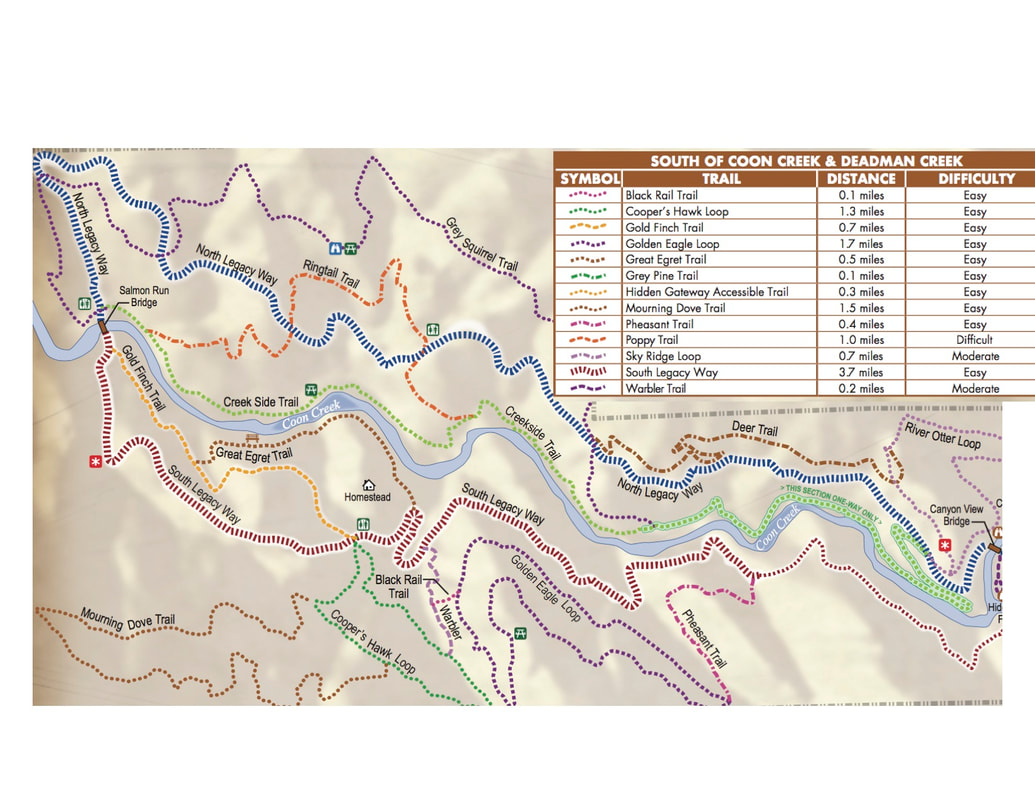
Heads up! There is a herd of cows wearing bells that run when a horse encounters them at Hidden Falls on the Creekside Trail. This area is soon after you cross the Salmon Run Bridge and then head up the one-way trail. When the cows run, the bells get loud and echo in the canyon. Some horses become quite concerned and the loud noise and the gallumping cows so keep a steady hand on those reins.
(Photo credit: Lori McIntosh)
Picture
Forward>>

    Archives

    June 2026
    May 2026
    April 2026
    March 2026
    January 2026
    December 2025
    November 2025
    October 2025
    September 2025
    August 2025
    July 2025
    June 2025
    May 2025
    April 2025
    March 2025
    February 2025
    January 2025
    December 2024
    November 2024
    October 2024
    September 2024
    August 2024
    July 2024
    June 2024
    May 2024
    April 2024
    March 2024
    February 2024
    January 2024
    December 2023
    November 2023
    October 2023
    September 2023
    August 2023
    July 2023
    June 2023
    May 2023
    April 2023
    March 2023
    February 2023
    January 2023
    December 2022
    November 2022
    October 2022
    September 2022
    August 2022
    July 2022
    June 2022
    May 2022
    April 2022
    March 2022
    February 2022
    January 2022
    December 2021
    November 2021
    October 2021
    September 2021
    August 2021
    July 2021
    June 2021
    May 2021
    April 2021
    March 2021
    February 2021
    January 2021
    December 2020
    November 2020
    October 2020
    September 2020
    August 2020
    July 2020
    June 2020
    May 2020
    April 2020
    March 2020
    February 2020
    January 2020
    December 2019
    November 2019
    October 2019
    September 2019
    August 2019
    July 2019
    June 2019
    May 2019
    April 2019
    March 2019
    February 2019
    January 2019
    December 2018
    November 2018
    October 2018
    September 2018
    August 2018
    July 2018
    June 2018
    May 2018
    April 2018
    March 2018
    February 2018
    January 2018
    December 2017
    November 2017
    October 2017
    September 2017
    August 2017
    July 2017
    June 2017
    May 2017
    April 2017
    March 2017
    February 2017
    January 2017
    December 2016
    November 2016
    October 2016
    September 2016
    August 2016
    July 2016
    June 2016
    May 2016
    April 2016
    March 2016
    February 2016
    January 2016
    December 2015
    November 2015
    October 2015
    September 2015
    August 2015
    July 2015

    Categories

    All

    RSS Feed

Home
Contact
 Mother Lode Trails is YOUR local volunteer-run trail information and resource website. Here you can find
up-to-the minute information on trail alerts, links and trail news for Placer,  Yuba, and Nevada counties.
Mother Lode Trails is trademarked.