You nearly jump out of your skin as a mountain biker speeds past you.
A couple of minutes later, you practically trip over a dog as it bounds, off-leash, down the trail.
And before you know it, you get to second base with a scratchy patch of bushes in an effort to let other hikers continue down the narrow trail. We’ve all been there: irritated with the lack of common courtesy, and grumbling instead of enjoying time spent outside.
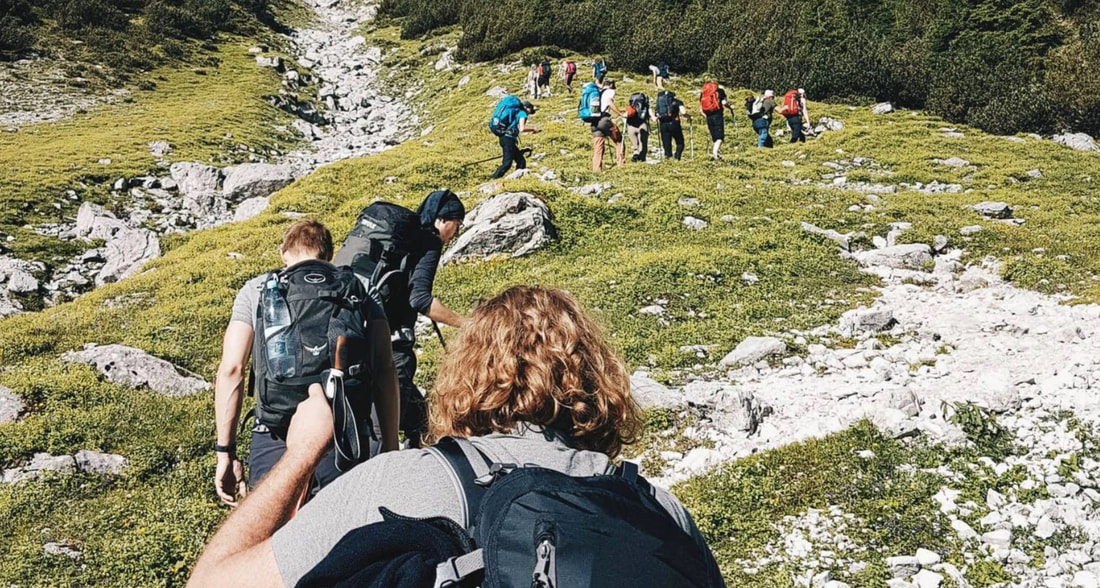
(Photo Credit: Walking in a single file on narrow trails protects local flora. Ben Maxwell / Pexels)
Since COVID started, more and more people have been seeking solace in the great outdoors, forcing long-time recreationists and newcomers to rub shoulders for the first time. Sometimes, these casual encounters can result in clashes filled with tension.
The solution is to practice proper trail etiquette. Following the unwritten rules of the trail can ensure proper civility, and allow adventurers new and old to enjoy their time in nature.
WHAT IS TRAIL ETIQUETTE
Trail etiquette is a series of guidelines that has the potential to make everyone’s experience in the outdoors more pleasant.
“It’s about being mindful. We’re all trying to enjoy this finite resource,” says Ben Lawhon of Leave No Trace, an organization that aims to help those heading outside to play make more responsible choices for themselves and the natural environments they’re in.
But while the social aspects of trail etiquette are paramount to creating a welcoming space, there can also be financial and ecological costs to not abiding by certain guidelines. For example, land management agencies around the country have seen excess trail usage in the past few years. And Lawhon, who works closely with these agencies, says they’ve reported excess damage to trails and plant life, a direct result of increased visitor traffic and people attempting to avoid one another.
Hikers and cross-country skiers can destroy delicate flora by deviating from designated paths, while mountain bikers can carve harmful ditches in the soft earth. Then, teams of employees or volunteers must spend valuable resources rebuilding trails and rehabilitating areas never intended to be trodden by human feet, tires, or skis.
Fortunately, a lot of the impact on trails is completely avoidable, Lawhon says. Proper trail etiquette is the first step.
DETERMINING WHO HAS THE RIGHT OF WAY
The most burning question trail etiquette can answer involves the right of way—who has it and who doesn’t.
TRAIL ETIQUETTE FOR HIKERS
On narrow trails, when you meet someone coming from the other direction or approaching from behind at a faster pace, one of you has to step aside and yield. Who does this depends on a few simple factors. If it’s another hiker and you’re on an incline, conventional wisdom says the person moving uphill has the right of way. If you’re the one headed downhill, then it’s up to you to step aside.
But Lawhon says that’s not a hard and fast rule. It’s always worth it to offer to step aside, but the other person may want a break if they’re in the middle of a long climb or are moving slowly. If they prefer to take a breather, they’ll let you know.
Who has the right of way when you’re on a flat stretch of trail is less straightforward. If there’s only space for one person or if someone is hiking behind you at a faster pace, find a flat patch of gravel or dirt nearby and take the opportunity to move over and let them pass. Whether you think you have the right of way or not, yielding to another hiker is always appreciated. If they yield for you, make sure to say thanks.
When trails are wide enough for multiple people to walk side by side, you should plan to hike single-file when other hikers are passing by. This will offer a little extra room so your boots or backpacks don’t collide.
TRAIL ETIQUETTE FOR OTHER TYPES OF TRANSPORT
Things often start to get hairy when people are using modes of transportation other than their feet.
Yield means to slow or stop, which ever is needed to allow others to safely pass.
DIFFERENTLY ABLED
But there’s an easy golden rule you should always follow -- differently-abled recreationists always get the right of way, no matter if they’re on crutches, a handcycle, a power chair, or the like.
HORSES AND MULES
The second rank goes to pack animals like horses or mules, to which ***all other traffic should yield.*** Where you step off depends on the trail and the animals. The prevailing thought is that you shouldn’t stand uphill from a pack animal as they might not be able to see you and you could spook them as they get closer. But Lawhon recommends asking the lead rider where they recommend you stand. They know their animals best and what is least likely to provoke an unwanted reaction.
CYCLISTS
***Cyclists, on the other hand, should always yield***, so if you’re on two wheels, be prepared to use those brakes when passing hikers, horses, or just about anyone on the trail. In addition, it’s good trail etiquette to announce yourself when coming up behind or ahead of hikers so they aren’t surprised by your abrupt presence. Phrases like “Coming up behind” or “Passing on your left” are effective.
If another hiker is kind enough to step off the trail for you, you should also let them know how many cyclists are behind you so they don’t resume their hike prematurely. Also, make sure to thank them for their courtesy as you pass.
STEPPING OFF THE TRAIL
Every time you step off the trail, either because you have to or out of courtesy, beware of damaging plants and natural surroundings.
“Think about where your feet are going to go when you step off the trail and find a durable surface to pass on,” Lawhon advises.
Usually, dry grass, gravel, rocks, or dirt are best as they’re highly resilient to impact. A spot like that isn’t always readily available, though, so just do the best you can.
Finally, ***never blaze a new trail*** just to put some distance between you and others. Step aside, pause, and when those who have the right of way have passed, resume on the designated trail.
LEASHED DOGS ARE BEST DOGS
Dog owners must abide by trail etiquette, too, starting with adhering to all park regulations about leashing your pet. If off-leash dogs are permitted, you should still keep a leash handy for when you pass other hikers and pack animals. Keep in mind some people are afraid of dogs, and horses might get spooked at the sight of a pooch, so be considerate.
***Going off-leash can also be dangerous for your pet if there are venomous snakes or bears in the area.***
But if you have any doubts about whether or not your four-legged friend can go off-leash, it’s always better to play on the safe side. “Be a good advocate for dogs on trails,” Lawhon suggests. “The best way for you to support the dog-owner community is to put your dog on a leash.”
KEEP THE MUSIC DOWN AND EARBUDS
Blasting your favorite tunes on your portable Bluetooth speaker may be the perfect complement to a great hike, but you need to think about how this might impact others.
Everyone has their own reason to be outdoors–quiet solace or fun recreation–and it pays to be respectful of that. If you don’t feel safe in complete silence while in the backcountry, do what makes you feel comfortable, but consider turning down the volume or pushing pause when passing other hikers.
If you opt to use earbuds, ***make sure you leave one out*** so you can still be aware of your surroundings — there may be others around you who may be trying to pass or wildlife coming up behind you.
However you enjoy the outdoors, be considerate of those around you and the space where you’re recreating. If everyone agrees on how to behave, polite interactions on the trail are possible, and all involved can have a great time outside and protect the lands we love.
To see the complete article, CLICK HERE.
A couple of minutes later, you practically trip over a dog as it bounds, off-leash, down the trail.
And before you know it, you get to second base with a scratchy patch of bushes in an effort to let other hikers continue down the narrow trail. We’ve all been there: irritated with the lack of common courtesy, and grumbling instead of enjoying time spent outside.
(Photo Credit: Walking in a single file on narrow trails protects local flora. Ben Maxwell / Pexels)
Since COVID started, more and more people have been seeking solace in the great outdoors, forcing long-time recreationists and newcomers to rub shoulders for the first time. Sometimes, these casual encounters can result in clashes filled with tension.
The solution is to practice proper trail etiquette. Following the unwritten rules of the trail can ensure proper civility, and allow adventurers new and old to enjoy their time in nature.
WHAT IS TRAIL ETIQUETTE
Trail etiquette is a series of guidelines that has the potential to make everyone’s experience in the outdoors more pleasant.
“It’s about being mindful. We’re all trying to enjoy this finite resource,” says Ben Lawhon of Leave No Trace, an organization that aims to help those heading outside to play make more responsible choices for themselves and the natural environments they’re in.
But while the social aspects of trail etiquette are paramount to creating a welcoming space, there can also be financial and ecological costs to not abiding by certain guidelines. For example, land management agencies around the country have seen excess trail usage in the past few years. And Lawhon, who works closely with these agencies, says they’ve reported excess damage to trails and plant life, a direct result of increased visitor traffic and people attempting to avoid one another.
Hikers and cross-country skiers can destroy delicate flora by deviating from designated paths, while mountain bikers can carve harmful ditches in the soft earth. Then, teams of employees or volunteers must spend valuable resources rebuilding trails and rehabilitating areas never intended to be trodden by human feet, tires, or skis.
Fortunately, a lot of the impact on trails is completely avoidable, Lawhon says. Proper trail etiquette is the first step.
DETERMINING WHO HAS THE RIGHT OF WAY
The most burning question trail etiquette can answer involves the right of way—who has it and who doesn’t.
TRAIL ETIQUETTE FOR HIKERS
On narrow trails, when you meet someone coming from the other direction or approaching from behind at a faster pace, one of you has to step aside and yield. Who does this depends on a few simple factors. If it’s another hiker and you’re on an incline, conventional wisdom says the person moving uphill has the right of way. If you’re the one headed downhill, then it’s up to you to step aside.
But Lawhon says that’s not a hard and fast rule. It’s always worth it to offer to step aside, but the other person may want a break if they’re in the middle of a long climb or are moving slowly. If they prefer to take a breather, they’ll let you know.
Who has the right of way when you’re on a flat stretch of trail is less straightforward. If there’s only space for one person or if someone is hiking behind you at a faster pace, find a flat patch of gravel or dirt nearby and take the opportunity to move over and let them pass. Whether you think you have the right of way or not, yielding to another hiker is always appreciated. If they yield for you, make sure to say thanks.
When trails are wide enough for multiple people to walk side by side, you should plan to hike single-file when other hikers are passing by. This will offer a little extra room so your boots or backpacks don’t collide.
TRAIL ETIQUETTE FOR OTHER TYPES OF TRANSPORT
Things often start to get hairy when people are using modes of transportation other than their feet.
Yield means to slow or stop, which ever is needed to allow others to safely pass.
DIFFERENTLY ABLED
But there’s an easy golden rule you should always follow -- differently-abled recreationists always get the right of way, no matter if they’re on crutches, a handcycle, a power chair, or the like.
HORSES AND MULES
The second rank goes to pack animals like horses or mules, to which ***all other traffic should yield.*** Where you step off depends on the trail and the animals. The prevailing thought is that you shouldn’t stand uphill from a pack animal as they might not be able to see you and you could spook them as they get closer. But Lawhon recommends asking the lead rider where they recommend you stand. They know their animals best and what is least likely to provoke an unwanted reaction.
CYCLISTS
***Cyclists, on the other hand, should always yield***, so if you’re on two wheels, be prepared to use those brakes when passing hikers, horses, or just about anyone on the trail. In addition, it’s good trail etiquette to announce yourself when coming up behind or ahead of hikers so they aren’t surprised by your abrupt presence. Phrases like “Coming up behind” or “Passing on your left” are effective.
If another hiker is kind enough to step off the trail for you, you should also let them know how many cyclists are behind you so they don’t resume their hike prematurely. Also, make sure to thank them for their courtesy as you pass.
STEPPING OFF THE TRAIL
Every time you step off the trail, either because you have to or out of courtesy, beware of damaging plants and natural surroundings.
“Think about where your feet are going to go when you step off the trail and find a durable surface to pass on,” Lawhon advises.
Usually, dry grass, gravel, rocks, or dirt are best as they’re highly resilient to impact. A spot like that isn’t always readily available, though, so just do the best you can.
Finally, ***never blaze a new trail*** just to put some distance between you and others. Step aside, pause, and when those who have the right of way have passed, resume on the designated trail.
LEASHED DOGS ARE BEST DOGS
Dog owners must abide by trail etiquette, too, starting with adhering to all park regulations about leashing your pet. If off-leash dogs are permitted, you should still keep a leash handy for when you pass other hikers and pack animals. Keep in mind some people are afraid of dogs, and horses might get spooked at the sight of a pooch, so be considerate.
***Going off-leash can also be dangerous for your pet if there are venomous snakes or bears in the area.***
But if you have any doubts about whether or not your four-legged friend can go off-leash, it’s always better to play on the safe side. “Be a good advocate for dogs on trails,” Lawhon suggests. “The best way for you to support the dog-owner community is to put your dog on a leash.”
KEEP THE MUSIC DOWN AND EARBUDS
Blasting your favorite tunes on your portable Bluetooth speaker may be the perfect complement to a great hike, but you need to think about how this might impact others.
Everyone has their own reason to be outdoors–quiet solace or fun recreation–and it pays to be respectful of that. If you don’t feel safe in complete silence while in the backcountry, do what makes you feel comfortable, but consider turning down the volume or pushing pause when passing other hikers.
If you opt to use earbuds, ***make sure you leave one out*** so you can still be aware of your surroundings — there may be others around you who may be trying to pass or wildlife coming up behind you.
However you enjoy the outdoors, be considerate of those around you and the space where you’re recreating. If everyone agrees on how to behave, polite interactions on the trail are possible, and all involved can have a great time outside and protect the lands we love.
To see the complete article, CLICK HERE.
 RSS Feed